October 07, 2026


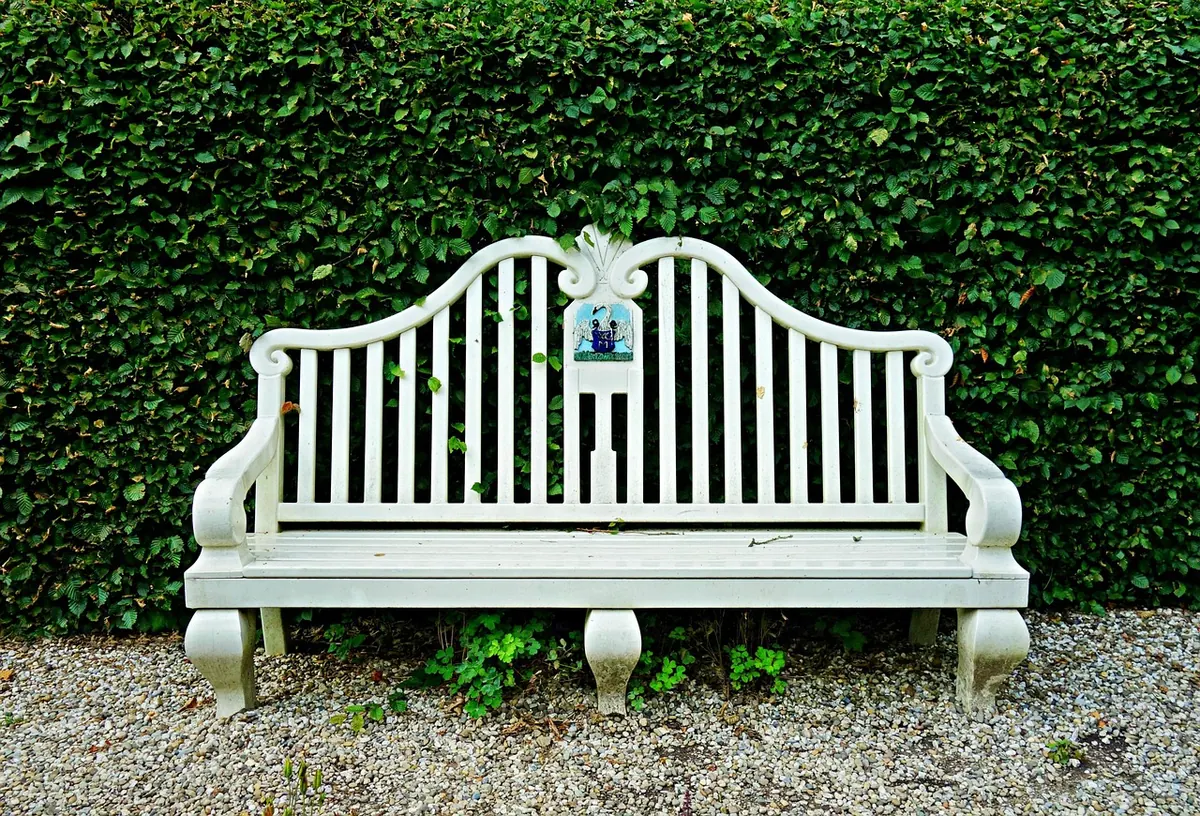
A stone bench is one of the few garden purchases you will still be looking at in twenty years. That is exactly why it is worth getting the measurements right before you order. In a small UK garden, a bench that is 20cm too long can block a path or crowd a patio, while one that is too short looks apologetic against a boundary wall. Get the size, the proportions and the position right, and the bench quietly does its job for decades.
Before you consider how a bench looks, work out how it will feel. Three dimensions decide whether people actually sit on it or merely lean against it.
Solid stone benches are often made with fixed proportions rather than chosen from a range, so measure a display bench if you can, or check the stated dimensions carefully. If the bench has a back, check where it meets your shoulder blades — a backrest that finishes mid-back is worse than none. Stone is also cold for eight months of the year, so it is worth choosing a design that takes a cushion, or one with timber slats set into a stone frame.
Take a tape measure outside and write down more than just the obvious length of wall. Measure the width of the gap at ground level and at seat height, since low planters, an outdoor tap or a bin store can all narrow the space where your knees and shoulders will be. Add 30–40cm of clearance in front of the seat so feet and a cup of tea have somewhere to go.
Then check what sits above and behind: a downpipe discharging onto a bench will stain it, and a gutter that drips on your neck will end the sitting habit quickly. Note where the ground is uneven, too. A stone bench needs a level, firm base — usually a paving slab, a compacted hardcore pad or a small concrete footing — and that base needs to be slightly larger than the bench itself.
Measure the space twice, then cut a template from cardboard or mark the footprint with masking tape on the paving. An hour with a template saves a great deal of regret.
In a small garden, the bench should read as furniture rather than as a wall. As a rough guide, leave roughly the same amount of clear space to either side of a bench as its own length. A 1.2m bench against a 4m fence, set with about a metre of planting at each end, looks deliberate. The same bench wedged between a gate and a shed looks like a mistake.
Height matters as much as length. A seat-and-back design around 85–95cm tall sits comfortably below most boundary fences and window sills. Anything much above a metre starts to dominate a compact plot. If the bench sits under a window, check the sightline from inside the house before you commit; a backrest creeping into the bottom of the view will annoy you every morning.
Colour changes apparent size, too. Pale limestone, sandstone and light-grey cast stone recede and make a tight corner feel more generous. Dark slate and polished granite look handsome but feel heavier and can overwhelm a small patio. A smoothly finished surface bounces light around a shaded corner; a riven or textured one holds shadow and looks older, faster.
In compact gardens, a bench usually earns its place in one of four spots: a corner set diagonally, where a 1.2m bench tucks into a right angle without eating the patio; against a sunny wall, where it borrows warmth and gives it back; at the far end of a path or axis, where it gives the eye somewhere to land; or on the edge of a patio, half in planting, so it reads as part of the garden rather than a piece of street furniture.
Watch the sun through the day before deciding. An east-facing bench suits morning coffee; a west-facing one catches evening light. A bench facing the house is often more used than one facing a fence, because it lets you look back at your own planting. Do keep main routes clear: leave at least 90cm of path beside a bench, more if it is a route people use with wheelbarrows or a buggy. And avoid placing it over tree roots or on ground that stays waterlogged through winter.
Stone looks immovable and largely is. A solid bench weighs far more than most people expect, so think about how it will reach the spot before you order. Check gate widths, steps, tight corners and whether a pallet can be dropped near the garden at all. Where access is difficult, a modular bench — a slab resting on two plinths — can be carried in pieces and assembled on site, and it is also easier to reposition later if you redesign the border.
If the bench is going onto a raised terrace, next to a retaining wall or on any structure you are unsure about, take advice from a qualified landscaper or structural engineer before placing it. That is a small cost against a much larger problem.
You do not need to guess. Cut a piece of cardboard to the bench footprint, or mark the dimensions on the paving with tape, and leave it there for a week. Sit on a dining chair in that exact spot at different times of day. Notice whether the sun reaches you, whether the wind funnels down the side of the house, whether you are staring at a fence panel or at the best border in the garden.
If you are ordering a bespoke size, measure the finished space one final time on the day you place the order, and check the supplier's policy on made-to-measure returns. Then buy the bench you can sit on comfortably, that fits the gap with room to breathe, and that you are happy to look at from the kitchen window. Do that, and you will only need to make the decision once.
Photo: ykaiavu / Pixabay

Handcrafted stone benches for gardens and landscapes.
Copyright © 2026 Pebble Bench. All rights reserved. Pebble Bench.